Description1
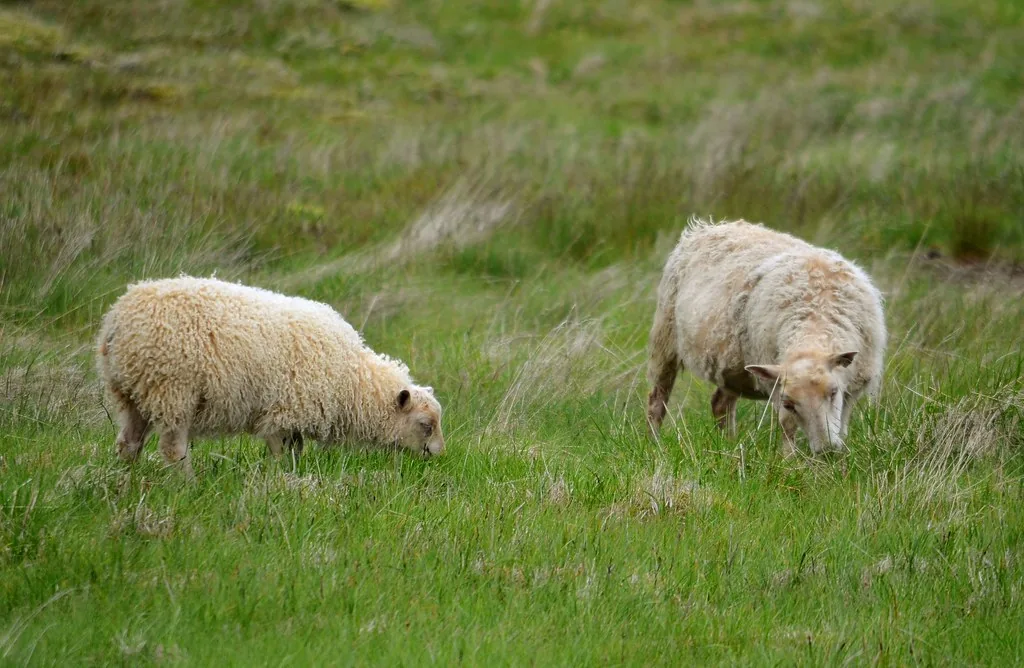
Iceland's sheep breed and one of the larger Northern European short-tailed breeds. Its ancestors came with Norse settlers in the 9th–10th centuries; it is related to the Faroese sheep and Norwegian Spælsau. Later crosses with imports left little trace, as crossbreds were culled during disease control.
Medium-sized, short-legged and broad-bodied but light-boned; face, legs and udder are woolless. Ewes weigh 68–73 kg, rams 91–100 kg. Its double coat protects against cold and wet; four base colours (white, yellow, black, moorit) combine with many patterns. Both sexes may be horned or polled.
Very prolific: in a study of 9,661 lambs 78% were twins and 14% triplets, and flock lambing is typically 175–220%. It is kept mainly for meat. Numbers peaked at about 891,000 in 1978; the official 2024 total was 345,440.
History1
9th–10th century
Brought to Iceland by Norse settlers.
1978
The population peaks at about 891,000.
2017
The Leadersheep (forystufé) is defined as a separate breed.
Breed standard and breed society
The official breed description, breeding goal and herdbook rules are published by the breed's recognised breed society.
- English Wikipedia – Icelandic sheephttps://en.wikipedia.org/wiki/Icelandic_sheep
Photo gallery
All photos are freely licensed (Wikimedia Commons, Flickr); author, source and licence are shown under each image.
Sources
Accessed: 2026-10-18.